| Overview of our last activities |
|---|
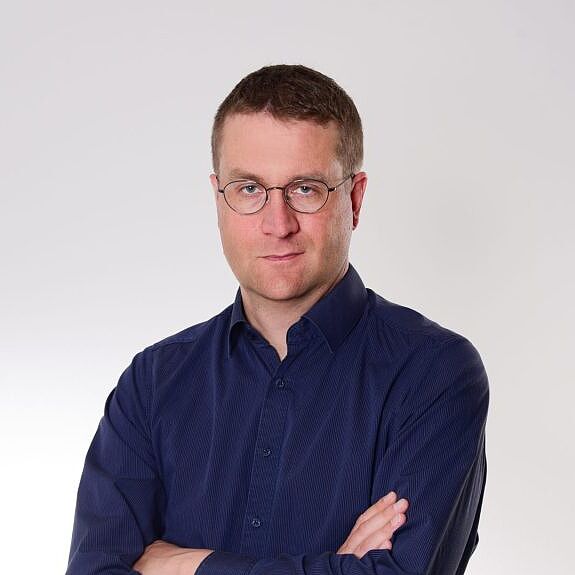
09.07.2026: Guest Talk Prof. D. Leising "Unethical Behavior in Academia: Forms, Causes, and Countermeasures"
The current speaker team met Prof. Leising at the 2026 German Conference of Women in Physics in Kiel. As unethical behaviour can take many different forms and have many facets, we invited him to share his insights into this complex topic with us and you. Together, we want to strengthen our awareness of misconduct and misbehaviour and learn how to recognize and address them.
Around 50 people attended the talk, including members of the university leadership, professors from the institute, doctoral researchers, as well as staff members from other institutes.
If you experience or witness misconduct or inappropriate behaviour, please feel free to speak to someone you trust, reach out to us by e-mail, or anonymously via the Interference box.
Recent years have seen a steady flow of media reports about cases of unethical
behavior in academia. Such behavior seems to be surprisingly common, often causes great damage, and typically remains unsanctioned.
In my talk, I will first introduce a number of basic concepts that are relevant to the discourse on this topic (e.g., power, abuse of power). Then I will discuss a number of key factors that may help explain the emergence and the persistence of unethical behavior in academia. Some of these factors are properties of unethical actors (e.g., psychopathic traits), some are properties of the people that surround unethical actors (e.g., conformity), and some are properties of the organizational setup (e.g., incentives, hierarchies, lack of effective oversight, hiring procedures).
Based on this analysis, I will present some recommendations for reforms of the academic system that may help reduce the frequency and the severity of unethical behavior in academia.
30.06.2026: Workshop Mental Health and Imposter Syndrome
The workshop, held by GSO* – Guidance, Skills & Opportunities for Researchers e. V., addressed key challenges during the PhD journey, including mental pressure, impostor syndrome, self-doubt, perfectionism and dealing with uncertainty in a high-performance environment. Participants reflected on common stressors and explored practical strategies for managing pressure and building confidence. The workshop also focused on career orientation, helping participants identify their strengths and interests and explore ways to develop their career strategy, visibility and network.
GRK Retreat 2025

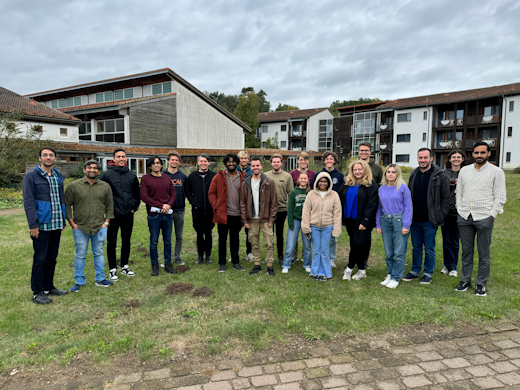
From September 24th to 26th, 2025, this year’s PhD retreat of the Graduate College of the SFB1477 LiMatI took place in Greifswald.
The event aimed to promote interdisciplinary exchange, discuss ongoing research projects, and further develop transferable skills.
A central element of the retreat was the poster presentations, which provided participants with the opportunity to present their doctoral research projects to their peers. The focus was not only on the scientific content but also on developing presentation skills—both in terms of scientific communication and personal presentation techniques. The doctoral researchers received valuable feedback from their colleagues, which helped them improve their presentation skills. The scientific program was complemented by group discussions on research-related questions as well as mentoring sessions, where experienced PhD students shared their knowledge with newcomers.
A special highlight of the retreat was the exclusive tour of the Wendelstein 7-X fusion facility at the Max Planck Institute for Plasma Physics. The participants showed great interest in the groundbreaking research in the field of plasma physics, and there was a strong desire for more scientific excursions in the future.
Additionally, a project management workshop was held, led by Ms. Karoline Goldstein. The practical content of the workshop was highly appreciated and regarded as a valuable addition to their academic training.
The social aspect of the retreat was also well represented: joint activities such as a walk through the historic center of Greifswald, a visit to the Eldena Abbey ruins, and evening board and card games offered ample opportunity for informal exchange and strengthened the bond among participants.
The retreat once again demonstrated the importance of cross-disciplinary dialogue and collaborative learning in an open atmosphere for the scientific development and networking of young researchers.


GRK Retreat 2024
From September 30th September to 2nd October, 2024, the PhD retreat of the Graduate College of the SFB1477 LiMatI took place in Ferienland Salem, Malchin.
The Doctoral Retreat brought together doctoral candidates to exchange ideas, present their research, and reflect on their experiences during the PhD journey. Alongside the regular poster sessions, which provided participants with an opportunity to present and discuss their current research topics, the programme included several interactive sessions focused on personal and professional development, peer exchange, practical skills, and community building.
“Grow into Your PhD” Workshop
The retreat also featured the workshop “Grow into Your PhD”, facilitated by Emma Geoffray. The workshop focused on the personal and professional development that takes place throughout the doctoral journey. Participants were encouraged to reflect on their role as doctoral researchers, their individual strengths and challenges, and the ways in which they can actively shape their PhD experience.
The workshop provided an opportunity to step back from day-to-day research activities, reflect on individual goals and expectations, and consider how to grow into the role of a confident and independent researcher.
Mentoring Session
A central element of the retreat was the Mentoring Session, which focused on the exchange between experienced doctoral candidates, postdocs, and researchers at an earlier stage of their PhD. Experienced participants offered small-group discussions addressing common challenges during the doctoral journey, such as writer’s block, time management, dealing with competing priorities, and career planning.
The session provided an informal setting in which doctoral candidates could ask targeted questions and benefit from the experiences and perspectives of their peers. By bringing together participants with different levels of experience, the session encouraged interdisciplinary support, practical advice, and mutual motivation.
Feedback & Reflection
The Feedback & Reflection Session offered participants the opportunity to jointly reflect on the retreat and their experiences. In an open discussion, participants shared their impressions, discussed what they found particularly valuable, and provided suggestions for future events.
The session also served as a space to collect ideas and identify topics and formats that could further support doctoral candidates in the future. By encouraging open and constructive feedback, the retreat contributed to a culture of continuous exchange and improvement.
Walk & Talk
The programme also included a Walk & Talk, providing a more informal opportunity for exchange outside the workshop setting. During a group walk in nature, participants paired up or formed small groups to discuss their research, experiences during their PhD, or other topics of interest.
The relaxed format encouraged conversations in a casual atmosphere and offered a welcome opportunity to step away from the more structured programme. At the same time, the physical activity and time outdoors provided a chance to recharge and support both mental and physical well-being.
GitLab Workshop
In addition, a practical GitLab workshop was conducted on site by the team of the LIMATI INF project. The workshop introduced participants to GitLab and provided hands-on guidance on using the platform for collaborative research and project work. The practical format allowed doctoral candidates to explore relevant features and tools directly and to discuss potential applications for their own research contexts.
Overall Aim and Benefit
By combining research presentations with personal development, mentoring, peer exchange, practical training, reflection, and informal networking, the Doctoral Retreat created a space for doctoral candidates to connect across disciplines and stages of their PhD. The programme addressed both the academic and personal dimensions of doctoral training and encouraged participants to share experiences, learn from one another, and build connections that can extend beyond the retreat itself.